
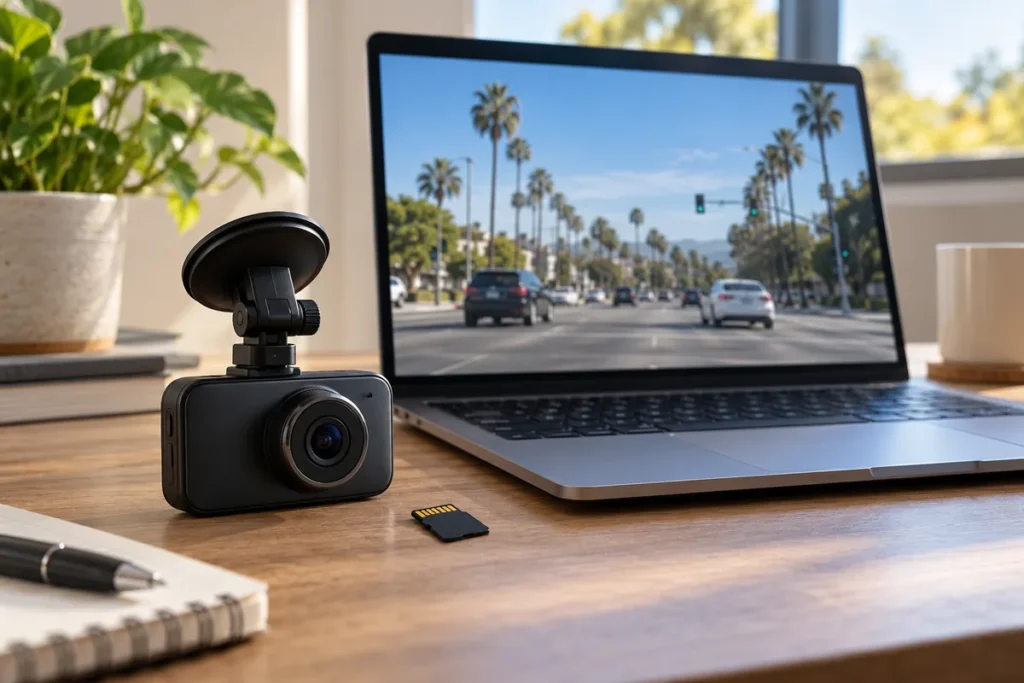
Dashcam footage after a California car accident can help explain a lane change, a sudden stop, or the sequence of impacts. But a camera in the windshield does not guarantee that the relevant recording was saved. Once you are safe and urgent medical needs are addressed, protecting the original file is a practical next step.
This guide focuses on preserving existing footage, not installing a camera or recording private conversations. For immediate scene priorities, see our California accident checklist.
Save dashcam footage before it is overwritten
Do not operate the camera while driving or stand in traffic to retrieve it. From a safe place, follow the instructions for your particular model to protect the incident recording. Check that the saved clip actually includes the collision and useful context before and afterward; an automatic event marker may capture only a short interval.
For example, Garmin’s recording instructions explain that certain cameras overwrite the oldest unsaved footage when storage fills. Some settings delete unsaved recordings sooner. Other manufacturers and models work differently. Do not assume turning a device off, pressing an unfamiliar button, or continuing to drive will preserve everything.
Keep an untouched original and a separate backup
Export the original video files using the manufacturer’s supported method. Keep the original filenames and available date information. Save another copy in a secure location you control, and check that both copies open and play. A phone recording of the camera’s screen is not a substitute for the underlying file.
- Keep relevant front, rear, and other camera views if available.
- Retain surrounding footage rather than only the moment of impact.
- Record the device model, approximate crash time, location, and who copied the files.
- Note any known clock error without changing the original recording.
- Do not format the card, run cleanup tools, or discard a damaged device while preservation questions remain.
If playback fails, avoid repeated experiments that could change the files. Ask the manufacturer, a qualified technician, or your attorney about safe recovery options. Keep a short record of any assistance received.
Request other recordings promptly and politely
You may notice a nearby business camera or a witness’s dashcam. Write down the location, camera direction, and contact information when safe. Ask the owner to preserve footage covering the relevant date and time, and retain your request and any response. Do not trespass, access another person’s account, or assume that a visible camera recorded the crash.
A request does not guarantee access or preservation. Retention practices differ, and formal steps may be necessary. Tell your lawyer about potential recordings early, particularly when a commercial vehicle is involved or responsibility is disputed.
Use video alongside other evidence
A narrow camera angle may miss a pedestrian, traffic signal, or earlier impact. Video does not by itself establish the extent of an injury. Keep scene photographs, witness contacts, report information, repair records, and medical documentation together. The California Department of Insurance’s accident guide recommends gathering witness information and photographing damage and the scene.
If responsibility remains contested, our guide to options when the other driver’s insurance will not pay explains how to organize the dispute. Keep income records separately too; see documenting lost wages.
Share securely without altering the evidence
Ask your insurer or attorney how to transfer large files securely and keep confirmation of delivery. Avoid public social-media uploads containing private information. If someone needs a shortened or redacted viewing copy, retain the unchanged original and label the copy clearly. Never remove unfavorable material from the original.
Do not assume that emailing a clip makes it courtroom-ready. California Rule of Court 2.1040 addresses transcripts and duplicate copies for certain electronic recordings presented as evidence. Applicable procedures and the recording’s reliability require individual review.
Need help organizing your next steps?
If you were injured and have questions about evidence or an insurance dispute, contact The L.A. Law Firm or call 866-383-1462. Phone intake is available 24/7; office visits are by appointment. An attorney can assess the available facts without promising a particular outcome.
General educational information, not individualized legal or medical advice. The featured image is an AI-generated conceptual illustration, not footage from an actual crash or client case.


