
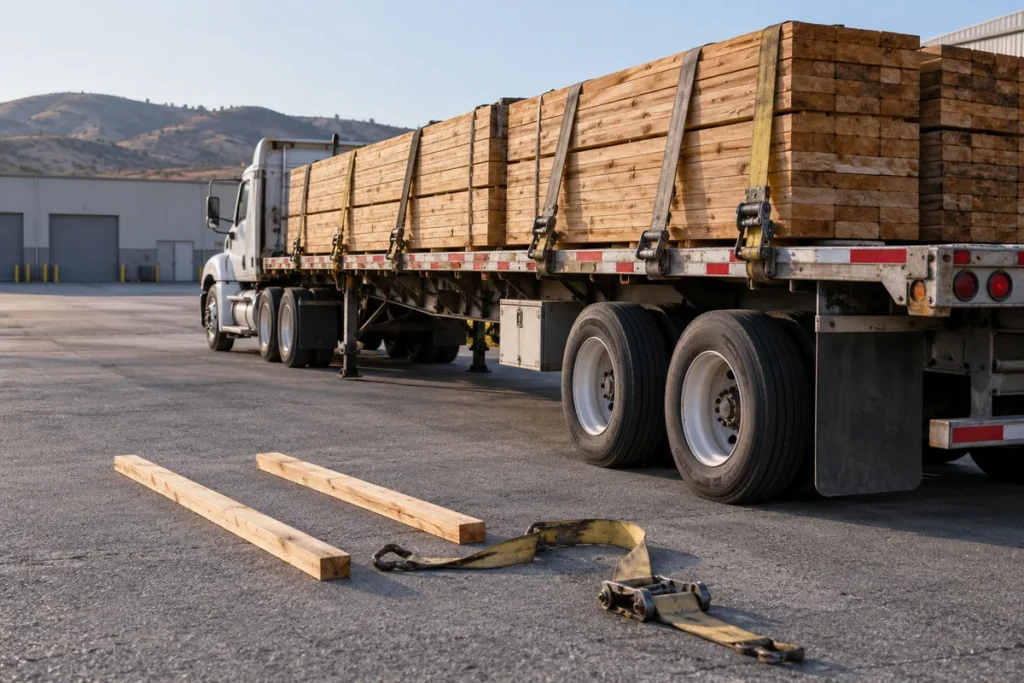
AI-generated fictional illustration; not an actual collision, client, or case. Not a cargo-loading instruction.
A board flies off a flatbed. A box lands in your lane. Traffic brakes suddenly, and your car is struck before you understand what happened. After a California truck cargo spill accident, identifying the source of the debris can be just as important as documenting the impact. Start with safety and medical needs, then preserve the facts you actually observed.
What should I do when cargo falls into traffic?
Do not chase the truck, stop in a travel lane to take pictures, or walk onto a freeway to retrieve an object. Move out of immediate danger when safe. Call 911 for injuries or an immediate roadway hazard. The California Highway Patrol’s emergency guidance specifically includes debris blocking the roadway. Tell the dispatcher the highway, direction, nearest exit or landmark, and affected lanes as accurately as you can.
Seek appropriate medical evaluation after an injury and describe your symptoms honestly. Do not delay treatment to collect evidence. A passenger or witness may be able to record details safely while you get help.
What evidence connects the debris to a truck?
Debris already lying on the road and cargo you actually saw fall are different observations. Write down which you witnessed; avoid filling gaps with guesses. Useful evidence may include:
- Original dashcam video showing the truck, falling item, and traffic before impact.
- Truck and trailer plates, company markings, vehicle numbers, and distinguishing features, if safely observed.
- Photos of damage, debris location, lane markings, and the surrounding scene from a safe place.
- Witness contact information and the investigating agency’s incident or collision-report number.
- The time, direction of travel, weather, and a brief account written while your memory is fresh.
Save unedited files and a backup. Our dashcam preservation guide explains why original recordings matter. For vehicle photos and repair records, use our collision-damage documentation checklist. Do not handle unknown substances or damaged securement equipment yourself.
Are trucking companies required to secure their loads?
The Federal Motor Carrier Safety Administration’s cargo rules address immobilizing and securing cargo on covered interstate commercial vehicles, including requirements for securement equipment and certain cargo types. The rules have scope limitations and exceptions; not every truck or material is governed identically. Sacramento County’s California load-securement guidance also identifies state requirements and the danger unsecured loads create.
A lawyer may examine who loaded the vehicle, who operated it, what equipment was used, and what records remain available. Those questions require evidence. A company name painted on a trailer does not, by itself, establish responsibility for every person or business involved.
What if I swerved or another vehicle hit me?
A cargo incident can involve more than direct contact with the falling object. A driver may brake, change direction, or become part of a chain-reaction collision. Document the sequence without assuming the first truck or the last driver is automatically responsible. Video and independent witnesses can help distinguish the original hazard from later impacts.
The same careful approach matters on Los Angeles and Long Beach freight routes, Inland Empire roads, or highways near Oakland and Sacramento. These are regional examples, not claims about a particular crash or local accident rates.
How can an attorney help with the claim?
Our commercial truck accident team can review the circumstances, identify potentially relevant records, and evaluate responsibility and available insurance. Preserve repair estimates, towing receipts, medical bills, and documentation of missed work. Ask what a proposed release covers before signing it. A commercial policy or serious-looking crash does not guarantee payment, a particular amount, or a quick resolution.
Contact The L.A. Law Firm at 866-383-1462 to discuss your options after a California truck-related injury. Phone intake is available 24/7; office visits are by appointment. Every case is different, and no result is guaranteed.
General educational information, not individualized legal or medical advice.


