
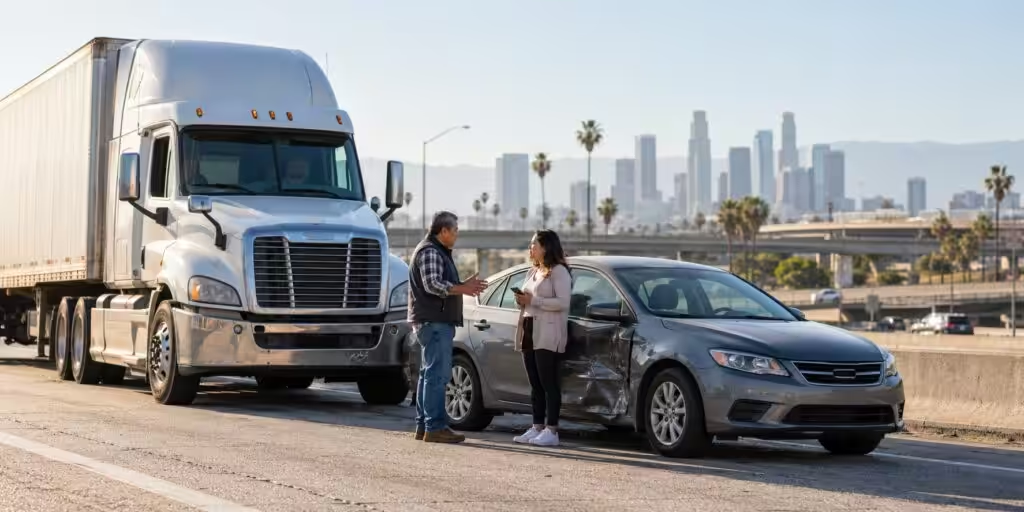
A semi-truck turns or crosses your lane, and the side of your car takes the impact. You may be dealing with a fractured bone, a possible head injury, a vehicle you cannot drive, and calls from several insurance representatives. It can be difficult to know whose policy applies or which records may disappear if no one asks for them.
If you were t-boned by a semi-truck, here is a practical starting point in Southern California. Every collision is different; neither the truck’s size nor a commercial policy automatically establishes fault or a settlement amount.
Put urgent health needs first
Call 911 for serious injuries or an unsafe scene. A head impact or sudden jolt deserves careful attention: the CDC explains that concussion symptoms may appear immediately or hours or days later, and lists emergency warning signs. Suspected fractures should be evaluated by a clinician. Keep discharge instructions, imaging reports, referrals, treatment dates and work restrictions; they can help explain what care was medically recommended and how recovery is progressing.
What makes a truck side-impact case different?
The driver, motor carrier, vehicle owner, shipper, maintenance provider and other parties may have different roles. Some collisions involve an unsafe turn, an overlooked blind spot, a traffic-control violation, or a mechanical issue. The investigation should follow the evidence rather than assume that all those parties are responsible.
Useful records can include the police or CHP report, photographs, witness contacts, intersection-camera or nearby business video, dashcam video, vehicle damage, repair estimates, and the truck’s identifying information. Commercial records may include dispatch information, driver qualification and hours-of-service records, electronic logging data, maintenance records, and applicable insurance documents. A lawyer can ask for preservation of relevant records early; availability and legal duties vary by case.
Is there always a million-dollar truck policy?
No. Coverage depends on the carrier’s operations, truck and cargo, policy terms, and potentially other layers of insurance. The Federal Motor Carrier Safety Administration’s insurance chart shows different federal minimum financial-responsibility levels for different kinds of for-hire interstate carriers; a non-hazardous property carrier with a vehicle rated at least 10,001 pounds is listed at $750,000, while certain hazardous-material operations have higher minimums. Those are regulatory minimums for covered operations, not a promise that a particular crash has that amount available, and they are not the measure of damages. State-only operations and actual policies need their own review.
What if I have a broken bone or possible brain injury?
Preserve the timeline. Record the first symptoms, ambulance or emergency visit, imaging, specialist recommendations, surgery or rehabilitation if prescribed, time away from work, and ordinary activities you cannot do. Avoid online “average settlement” figures; they ignore diagnosis, recovery, liability, coverage, and other individual facts. Our guides to broken-bone injuries and brain injuries explain issues to discuss with your own providers and counsel.
How do reports and property damage fit in?
If CHP responded, an involved party may request a CHP crash report. Separately, California DMV requires an SR-1 within 10 days when a crash causes any injury or death, or more than $1,000 in property damage. Document towing, storage, repair estimates, a rental or other transportation needs, and any communications about the damaged vehicle. Property-damage and bodily-injury issues may be handled on different timelines; do not assume resolving one automatically resolves the other.
When should I speak with a truck accident lawyer?
Consider a conversation before giving a detailed recorded statement or accepting a final release if liability is contested, injuries are serious, or several insurers are involved. Counsel can help identify the correct parties and coverage, preserve evidence, and coordinate the claim while you follow medical advice. Read about our truck accident practice or request a free case review. You can also call (866) 383-1462. This article is educational, not legal or medical advice for a particular person; a consultation does not guarantee an outcome.
Related reading: what to document after a freeway rear-end crash and neck pain after a minor crash.



