
You are driving in slow traffic on the 405 when brake lights sweep across the lanes. You stop, then feel the impact from behind. If more than two vehicles are involved, the order of impacts may be hard to remember. The first priority is safety and medical care—not deciding fault on the shoulder.
This guide explains what to preserve after a freeway rear-end crash caused by a sudden stop in Southern California and how a claim may be evaluated. It is general information, not a determination of fault in your case.
Get to safety and seek care
If anyone may be seriously hurt, call 911. Follow the directions of emergency personnel and do not stand in an active traffic lane to take photographs. Neck pain, headache, dizziness, or confusion can develop after a collision even if you felt able to speak at the scene. A clinician—not a photograph of bumper damage—should evaluate symptoms. The CDC lists concussion danger signs that call for immediate emergency care, including a worsening headache, repeated vomiting, weakness, unusual behavior, or loss of consciousness.
What evidence helps explain a sudden stop?
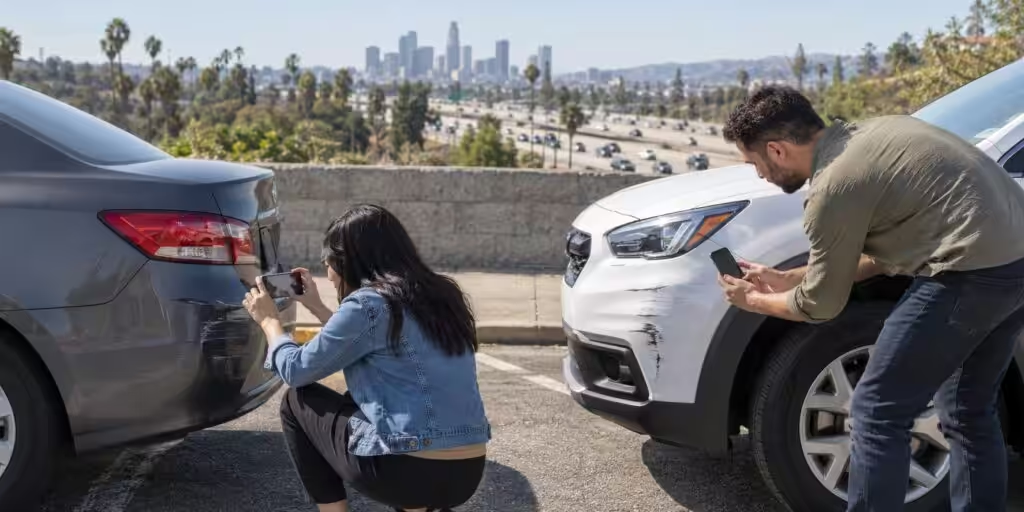
Once you are somewhere safe, record the crash location, direction of travel, lane, time, weather, traffic conditions, and the order in which vehicles struck each other. Photograph every vehicle from multiple angles, the visible damage, debris, skid marks if safely observable, and the surrounding roadway. Save dashcam footage before the device overwrites it. Obtain each driver’s name, contact and insurance details, and note witnesses who saw the traffic sequence.
In a multi-car collision, the damage pattern and a witness account may be more useful than a broad statement that “the last driver is always at fault.” A following driver may have been too close, but sudden braking, a lane change, road conditions, or an earlier impact may also matter. The evidence should be reviewed before responsibility is assigned. If the CHP investigated, an involved party can request its crash report through the CHP process; our CHP 190 guide explains the request.
Do I still file a California DMV report if police came?
Potentially yes. The California DMV says an SR-1 must be sent within 10 days if anyone was injured or killed, or property damage exceeded $1,000. The SR-1 is required in addition to a police, CHP, or insurance report. If you are unsure whether the threshold is met, review the DMV instructions promptly.
What if the impact looked minor but symptoms came later?
Tell a healthcare professional about the collision and describe when each symptom began. Follow the care plan you receive and keep visit summaries, bills, work restrictions, medication receipts, and a simple dated account of how your condition affects daily tasks. Avoid guessing at a diagnosis or waiting for an insurer to tell you whether care is necessary. A low repair estimate does not by itself establish the presence or absence of an injury.
Which insurance may be involved?
The at-fault driver’s liability coverage may be one source. Depending on the facts and the policies, your collision coverage, medical payments coverage, or uninsured/underinsured motorist coverage may also matter. These coverages have different purposes and limits; the California Department of Insurance guide explains the basics. Our UM/UIM coverage explainer provides additional context. Do not assume every policy applies or that a policy limit equals the value of a claim.
When could a lawyer help?
Legal help may be useful when vehicles struck in sequence, accounts conflict, injuries are serious or appear later, an insurer disputes fault, or property damage and medical care are moving at different speeds. An attorney can identify which records to preserve, review available policies, and communicate with insurers while you focus on treatment. Learn more about our freeway accident and rear-end collision services.
Related reading: neck pain after a fender bender and what matters after a semi-truck side-impact crash.
If this sounds like your collision, request a free case review or call (866) 383-1462. The L.A. Law Firm can discuss your injuries, treatment, transportation and vehicle-repair concerns. An inquiry does not create an attorney-client relationship; each case depends on its own facts.



