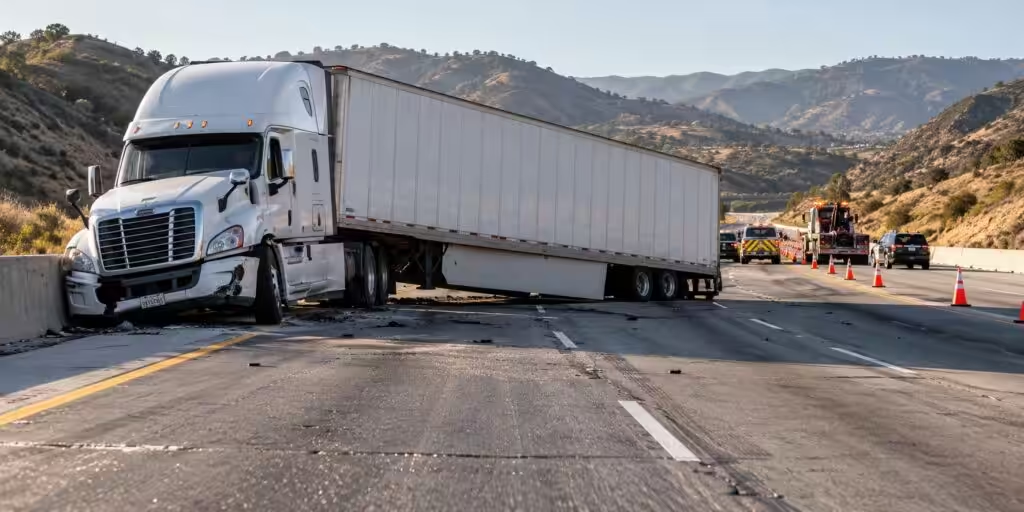
A jackknifed semi can swing across lanes and bring freeway traffic to a sudden stop. A jackknife truck accident can involve the truck, several passenger cars and more than one collision sequence. If you were injured, a useful first step after medical care is preserving the facts before vehicles and electronic records move on.
What causes a truck to jackknife?
There is no single cause. Braking, speed, roadway conditions, equipment, loading and other drivers’ actions may all be investigated. A jackknife by itself does not prove a trucking company or driver was negligent. Crash reconstruction needs the physical scene, witness accounts and available vehicle data.
Which evidence is worth saving?
Record the truck and trailer identifiers, carrier name, license plates if safely visible, crash location, weather, lane positions, witness details and report number. Keep your photographs, dashcam file, medical records, repair estimates and towing receipts. For CHP-investigated collisions, review the agency’s report-request process. Commercial records may require prompt preservation requests by counsel.
What can a lawyer examine?
An attorney may assess the driver’s actions, maintenance and inspection records, cargo information, electronic data, other drivers’ roles and multiple insurance policies. The FMCSA tracks jackknife involvement in truck crashes, but statistics cannot decide an individual case.
Why identify the tractor, trailer and carrier separately?
The company name on a trailer may not tell you who operated the truck on that trip. If you already have safe photographs, keep the original files showing the cab, trailer, plates, company lettering and identifying numbers. Do not return to an active freeway or approach a damaged truck to obtain them. Tell your attorney which details are missing rather than filling gaps with assumptions.
A review may compare those identifiers with the crash report and the records available from the involved businesses. The FMCSA’s crash-causation research describes crashes as complex events involving driver, vehicle and environmental factors. That is a reason to investigate the entire sequence rather than assign responsibility from a single photograph.
Keep injury records separate from the vehicle-damage file
Save treatment records, bills, work restrictions and notes about how the injury affects ordinary activities. In a separate folder, keep the towing invoice, storage notices, repair estimate, rental receipts and insurer correspondence. Identify what has been paid, what remains disputed and which documents you are still waiting for. A vehicle repair decision does not, by itself, resolve an injury claim.
Can I get help before the police report is ready?
Yes. Bring the report number and the documents you have, and explain what is pending. Our guide to a delayed police report explains practical next steps. Do not assume that waiting for a report pauses any notice or filing deadline; ask for advice about the dates that apply to your circumstances.
See our truck accident practice, freeway accident page and semi-truck impact guide. For a free discussion of treatment, insurance and property damage, contact us or call (866) 383-1462. General information only, not case-specific legal advice.