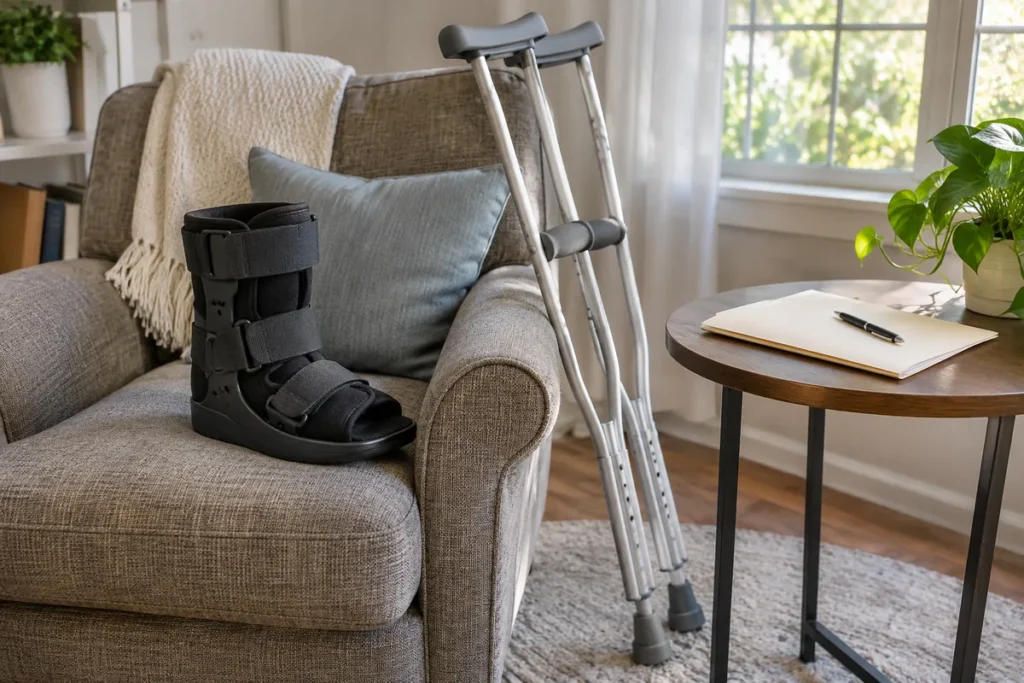
After fracture surgery from a California crash, the hospital bill may be only part of the picture. You may still have follow-up visits, movement restrictions, rehabilitation questions, and uncertainty about returning to work. A useful injury record separates what has already happened from what your medical team expects next. Surgery does not establish a fixed settlement value or prove that another person caused the collision.
Image disclosure: AI-generated fictional illustration; not an actual client, recovery outcome, medical recommendation, or case record.
Why can recovery continue after the operation?
The American Academy of Orthopaedic Surgeons’ fracture guide explains that treatment and healing depend on the particular fracture and other health factors. Some injuries are treated with casts; others require surgical fixation. Pain can improve before the bone can safely tolerate normal activity. Follow your treating team’s instructions rather than using an online recovery estimate to decide when to drive, lift, or exercise.
Build a timeline of care, not just a pile of bills
Keep documents in date order and label the provider and visit type. Start with these groups:
- Diagnosis and surgery: Emergency records, imaging reports, the operative report, and discharge instructions. Ask separately about obtaining the actual imaging files when needed.
- Follow-up care: Specialist visit summaries, referrals, therapy evaluations, appointment changes, and written restrictions.
- Daily function: A truthful record of help needed with dressing, stairs, transportation, or household tasks. Include improvements, not only difficult days.
- Work and expenses: Dated work restrictions, employer records, receipts, bills, payment records, and insurance statements.
HHS explains patients’ access rights to medical and billing records held by covered providers and health plans, subject to exceptions. Ask the records office how to request copies; do not assume a patient-portal summary contains every relevant document. Our broken-bone injury practice page explains the broader legal context.
What makes future medical care different?
California’s civil jury instructions distinguish treatment already received from future care. CACI 3903A requires evidence supporting both the reasonable cost and medical necessity of future treatment, along with reasonable certainty that it will be needed. A possibility mentioned during a visit is not automatically an established future expense. A clinician’s explanation, relevant records, and appropriate expert analysis may help clarify the difference.
Ask your treating clinician which care is currently recommended, which options depend on later findings, and when the plan should be reassessed. If you are concerned about another procedure or implanted hardware, ask about your own situation; do not assume removal or additional surgery is inevitable. Medical decisions should reflect your health needs, not an effort to increase a claim.
Keep medical costs and pain evidence separate
A provider statement, an explanation of benefits, and a receipt can describe the same service. Organize them together rather than adding them as three separate losses. Our medical-bills and EOB guide explains that distinction. Keep estimates for proposed treatment separate from charges already incurred; an estimate is not proof that the treatment will be required or covered.
Physical pain and changes in daily life are different from medical expenses. CACI 3905A recognizes noneconomic harms and does not prescribe a fixed calculation. Describe actual limitations, duration, assistance, and progress without exaggeration. Our pain-and-suffering guide explains why multiplying bills does not determine an award.
Discuss the unresolved questions before signing
If a serious collision involved a commercial vehicle, our truck accident attorneys can discuss vehicle evidence alongside the injury documentation. Before signing settlement paperwork, ask which claims it resolves and how unresolved care needs have been evaluated. Fault, coverage, and provable losses still require individual review.
The L.A. Law Firm helps people injured because of someone else’s negligence. Contact our team at 866-383-1462 to discuss your circumstances. Phone intake is available 24/7; office visits are by appointment. Hablamos español. No result is guaranteed. General educational information, not individualized legal, medical, or insurance advice.