
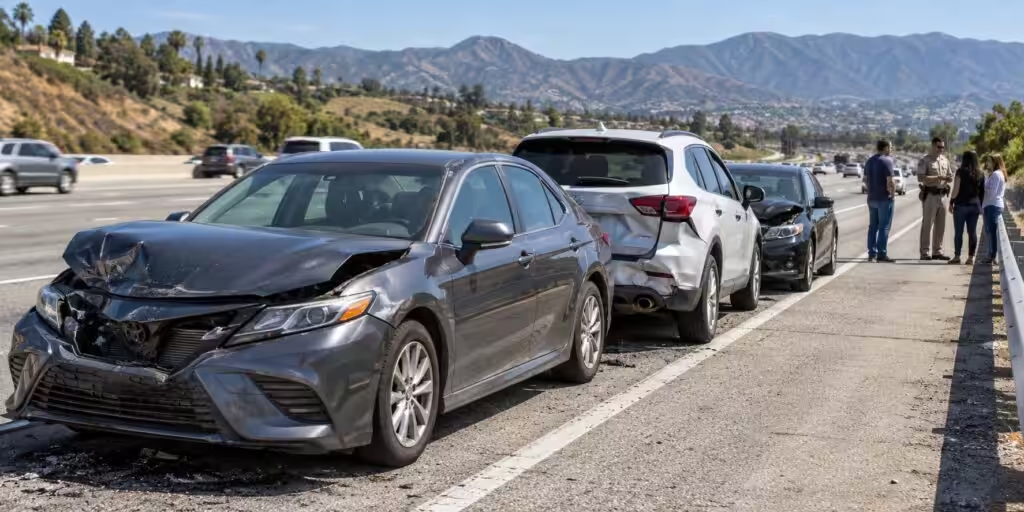
A sudden slowdown on a Southern California freeway can become a three- or four-car crash in seconds. You may know who hit you, but not who triggered the first impact. A multi-car freeway accident needs a careful sequence of evidence before anyone assigns fault.
How do investigators reconstruct the sequence?
Vehicle damage, final positions, dashcam and traffic-camera footage, witness accounts, skid marks and an officer’s observations can help. Record which impact you felt first, whether there was a second impact and where your car moved. Do not assume the last driver is automatically responsible for every injury or every repair. More than one driver may have contributed, and separate impacts may matter.
What should you preserve?
First move to safety and get needed medical care. Save photos of each vehicle and lane location if safe, driver and witness information, tow details, repair estimates and medical records. Ask for the report number; for a CHP-investigated crash, see its crash-report instructions. The DMV says an SR-1 is due within 10 days if anyone was injured or damage exceeded $1,000.
Why might insurance take longer?
Several insurers may need to review statements, damage and available coverage. A lawyer can help organize the chronology and identify missing footage or policy information while you focus on care. A pileup is not, by itself, proof that every driver shares equal fault.
Explore our freeway accident and rear-end collision pages. If injuries, treatment or vehicle repairs are becoming difficult to manage, request a free case review or call (866) 383-1462. This is general information, not legal advice about a particular collision.



