
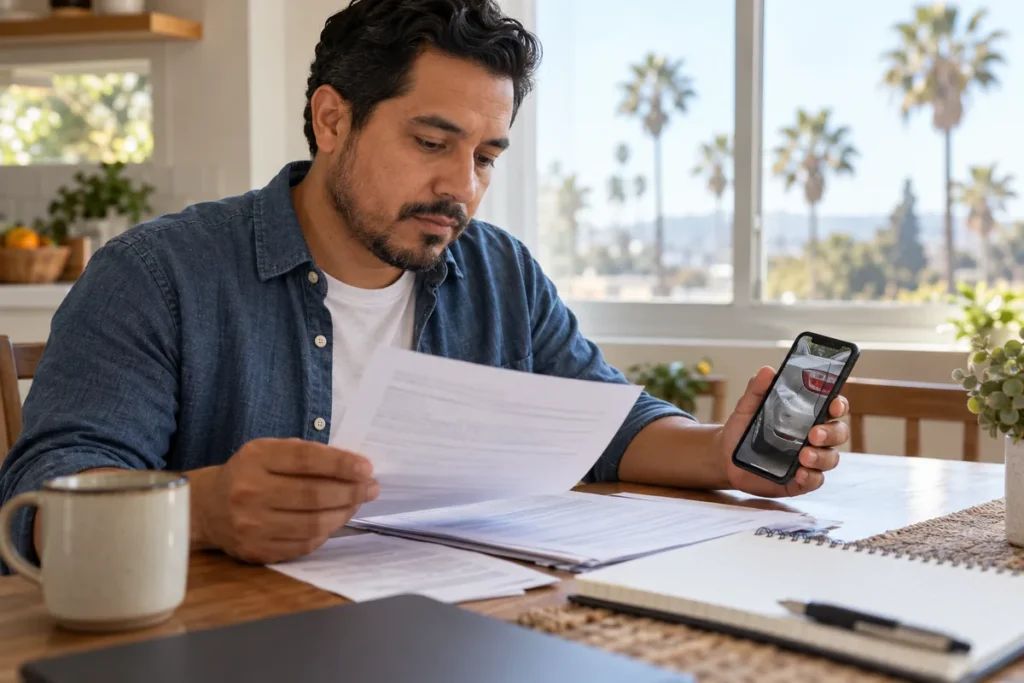
Image disclosure: AI-generated fictional illustration; not an actual client, accident, or case result.
You exchanged information after a crash, but now the other driver says there is no insurance. Meanwhile, you have medical appointments, missed work, and a damaged car. An uninsured driver does not automatically mean there are no options. It does mean you should separate three questions: who caused the collision, which coverage applies, and what evidence supports your losses.
This guide focuses on an identified uninsured driver in California. For an unknown fleeing driver, see our separate hit-and-run injury guide; additional requirements can apply.
What does uninsured motorist coverage mean?
Uninsured motorist bodily injury coverage, often called UM or UMBI, may help when an uninsured driver who is at fault injures an insured person. It is different from underinsured motorist coverage, or UIM, which concerns an at-fault driver whose available insurance is insufficient. Neither label guarantees payment.
The California Department of Insurance coverage guide explains that insurers must offer UM/UIM protection and that rejecting it requires a waiver. Ask for your declarations page, complete policy, endorsements, and any signed rejection. The phrase “full coverage” is not enough to establish what you purchased. Our auto-insurance coverage overview compares the different protections.
Start with an organized claim file
Get emergency assistance when needed and seek appropriate medical care. Report the crash to your insurer promptly. The Department of Insurance accident-claim guide explains that a UM claim requires documentation of injuries and losses. Begin with these folders:
- Collision: driver and vehicle details, witness contacts, photographs, video, and the police report number.
- Coverage: policy documents, the other carrier’s written response if one exists, and your insurer’s claim number.
- Recovery: medical records, bills, work restrictions, wage records, and receipts.
- Communications: dated messages, document requests, your responses, and delivery confirmations.
Keep originals and a backup. Label a photograph with its actual date and context; do not edit damage or recreate evidence. Our vehicle-damage documentation checklist offers practical ways to organize what you saved.
Do not confuse missing insurance with proven fault
A driver saying “I am uninsured” does not explain how the collision happened. Write down the sequence in your own words while it is fresh. Separate what you personally saw from what someone told you. Note uncertainty instead of filling gaps with guesses.
Likewise, an insurance card is not a final coverage decision. Ask what information is still needed to establish whether a policy applied on the collision date. If the driver and vehicle owner are different people, preserve both sets of information for review.
Will UM pay to fix my car?
Bodily injury and vehicle damage are different coverage questions. California’s insurance guide describes UMPD as limited protection for damage caused by an identified uninsured at-fault driver. Collision coverage may instead address vehicle repairs, subject to policy terms and a deductible. MedPay may address covered medical expenses regardless of fault. Ask the adjuster which claim is being evaluated and which limits apply.
Reporting and follow-up still matter
The California DMV requires an SR-1 within 10 days when someone is injured or killed, or property damage exceeds $1,000. This is separate from police and insurance reports. Do not assume someone else filed it; confirm that it was submitted.
For claim follow-up, send a short written list of outstanding questions. Ask which documents remain missing and request an explanation of any denial. Before signing a release or accepting a direct payment from the other driver, have its effect on insurance rights reviewed. A quick payment can carry conditions you did not intend to accept.
When should you ask for legal help?
The L.A. Law Firm reviews injury matters involving another party’s negligence. We can help evaluate evidence, available policies, and disputed claim issues; coverage and recovery depend on the facts. Call 866-383-1462 or request a consultation. Phone intake is available 24/7; office visits are by appointment. This is general educational information, not individualized legal or medical advice.


